
Building our Rows
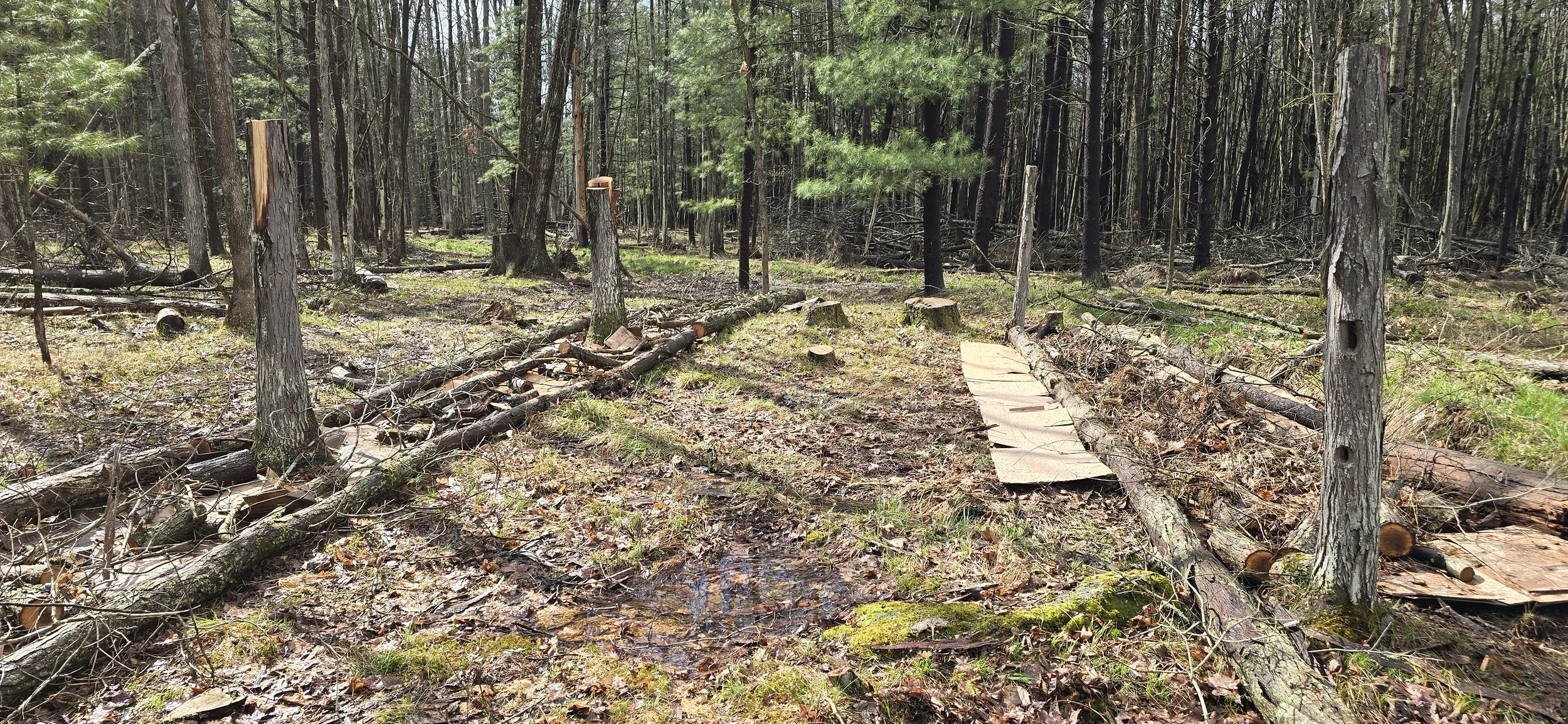
Establishing the Orchard: Building from the Southwest Corner
Where It All Begins
There’s something powerful about choosing a starting point—and committing to it.
For us, that point is the southwest corner of the property, where the first real structure of our orchard is beginning to take shape. From here, we’re working backward and to the east, slowly turning raw land into something intentional.
What you’re seeing here isn’t polished. It’s not clean. But it’s real progress.
Laying the Foundation: Cardboard, Logs, and Vision
At the core of everything we’re doing right now is a simple but powerful system:
Cardboard as a natural weed barrier
Woody debris as structural fill
Soil and mulch to finish the row
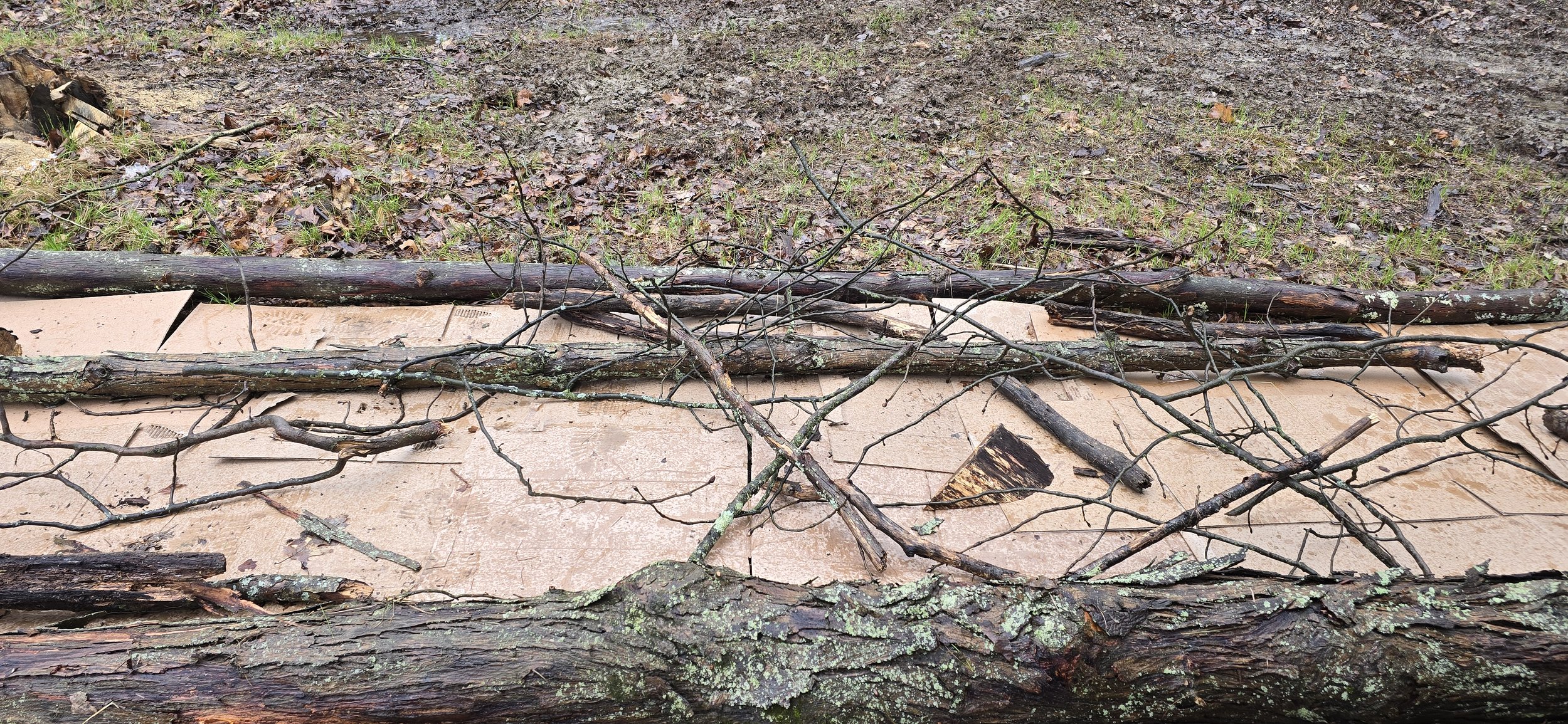
We’re laying cardboard directly onto the ground to suppress weeds naturally—no chemicals, just time and layering. On top of that, we’re stacking logs, limbs, and branches from the land itself, creating the base of what will become our raised orchard rows.
It’s a system that builds from the bottom up—literally.
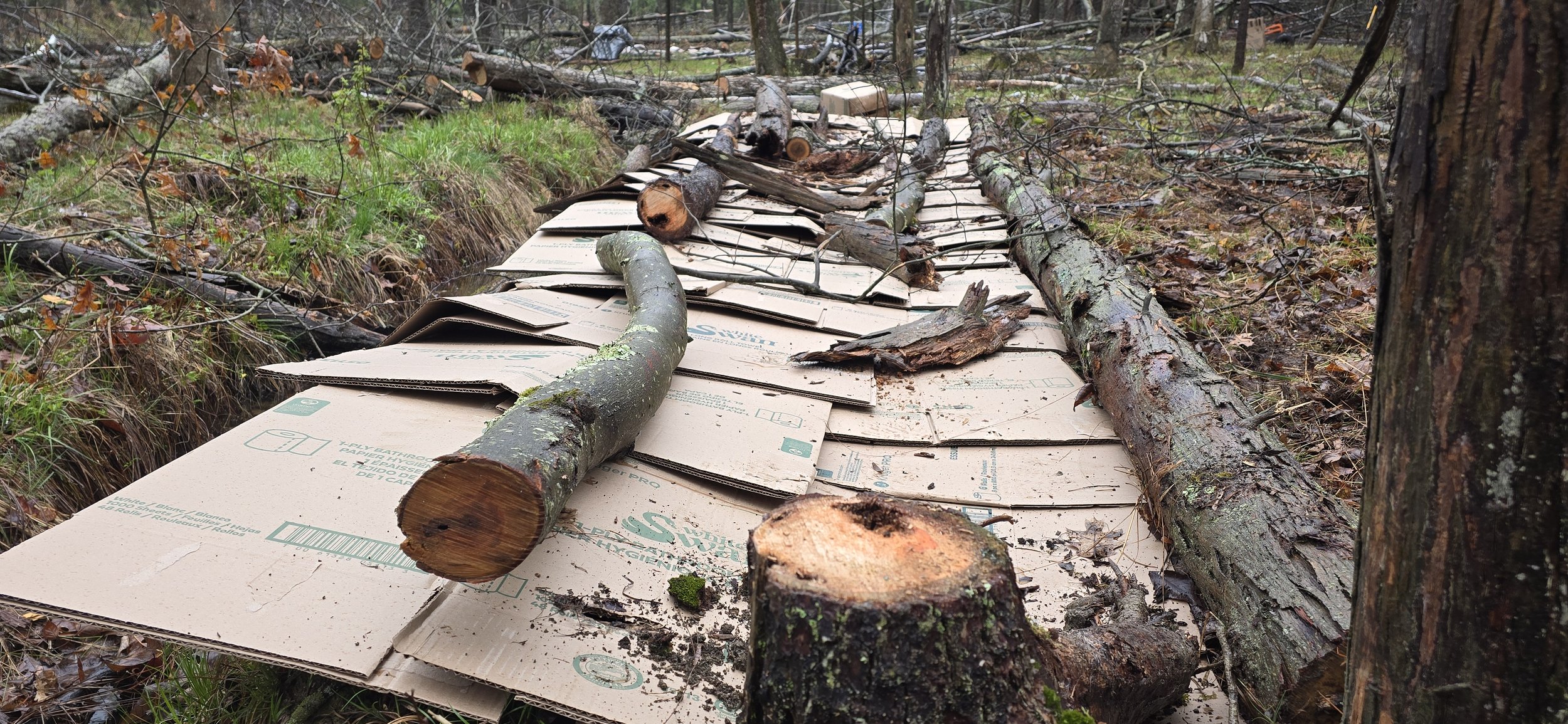
Raised blackberry row using cardboard weed barrier and logs on wet soil in early orchard setup in Hammondsport NY
Solving the Water Problem by Elevating the Orchard
If there’s one thing this land has made clear, it’s this:
There’s no shortage of water.
The challenge isn’t finding it—it’s organizing it.
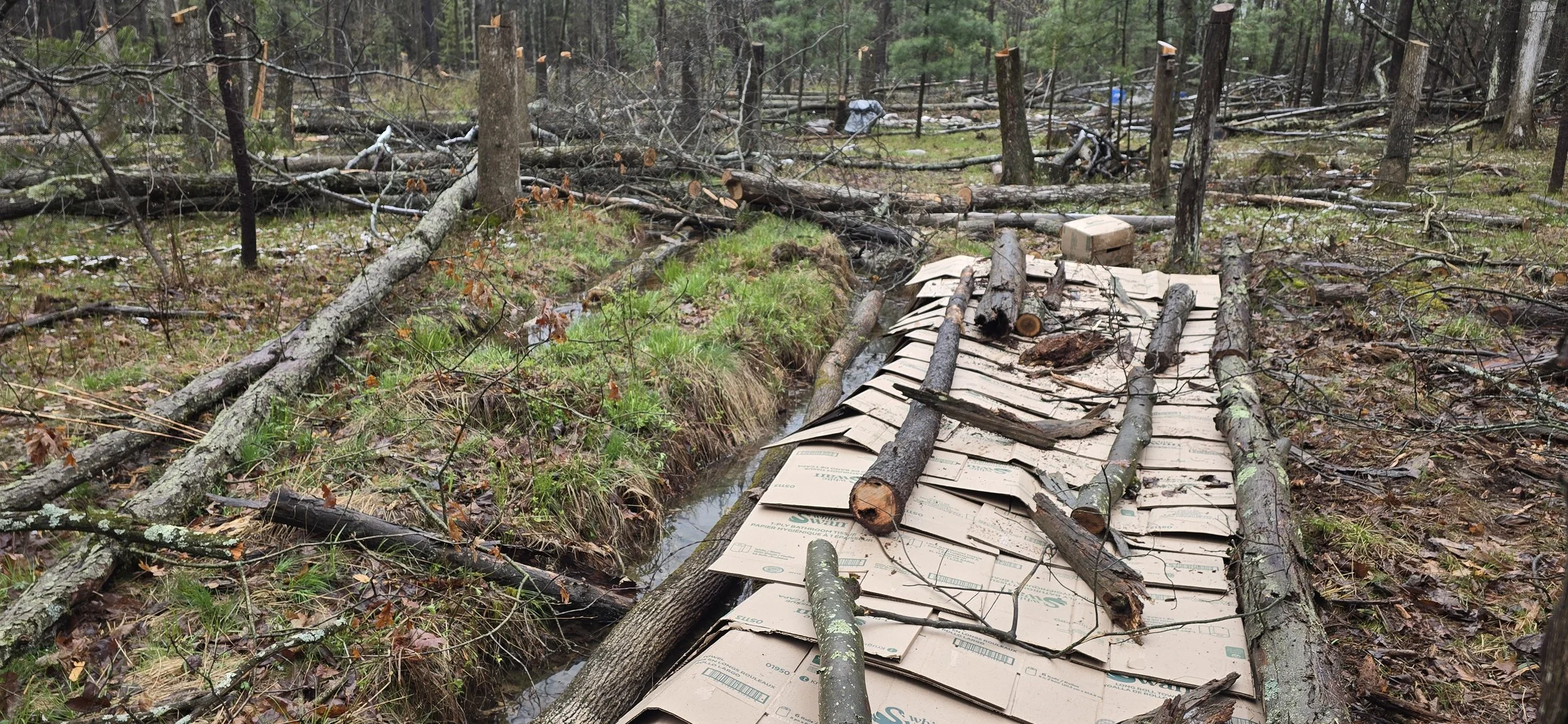
We have water moving through the property in natural paths, low areas holding moisture, and sections that stay consistently wet. Instead of fighting that, we’re adapting to it.
By using logs to raise our blackberry rows, we’re:
Keeping roots out of saturated soil
Improving natural drainage
Creating a long-term organic base as the wood breaks down
Blackberries don’t tolerate “wet feet,” so this step isn’t optional—it’s foundational.
Building the First Rows: Juneberries and Blackberries
The layout is starting to reveal itself.
We’ve established:
A Juneberry row, which we’re exploring as a natural hedge system
A blackberry row, positioned to eventually connect with our original Site #1 plantings
The Juneberries are more than just fruit—they’re structure. A way to define the orchard, create natural boundaries, and build something that feels integrated into the land rather than imposed on it.
The blackberries, on the other hand, are the backbone of production—and everything about how we build these rows now will impact how they perform long-term.
Repurposing the Land to Build the Future
Nothing here is wasted.
Every downed tree, every branch, every piece of debris is being repurposed into the orchard:
Large logs → structural base for raised rows
Medium limbs → filler and elevation
Small branches → future mulch and organic matter
This isn’t just cleanup—it’s regenerative building.
Over time, all of that wood will break down, feeding the soil, improving structure, and supporting the plants above it.
Progress in Its Rawest Form
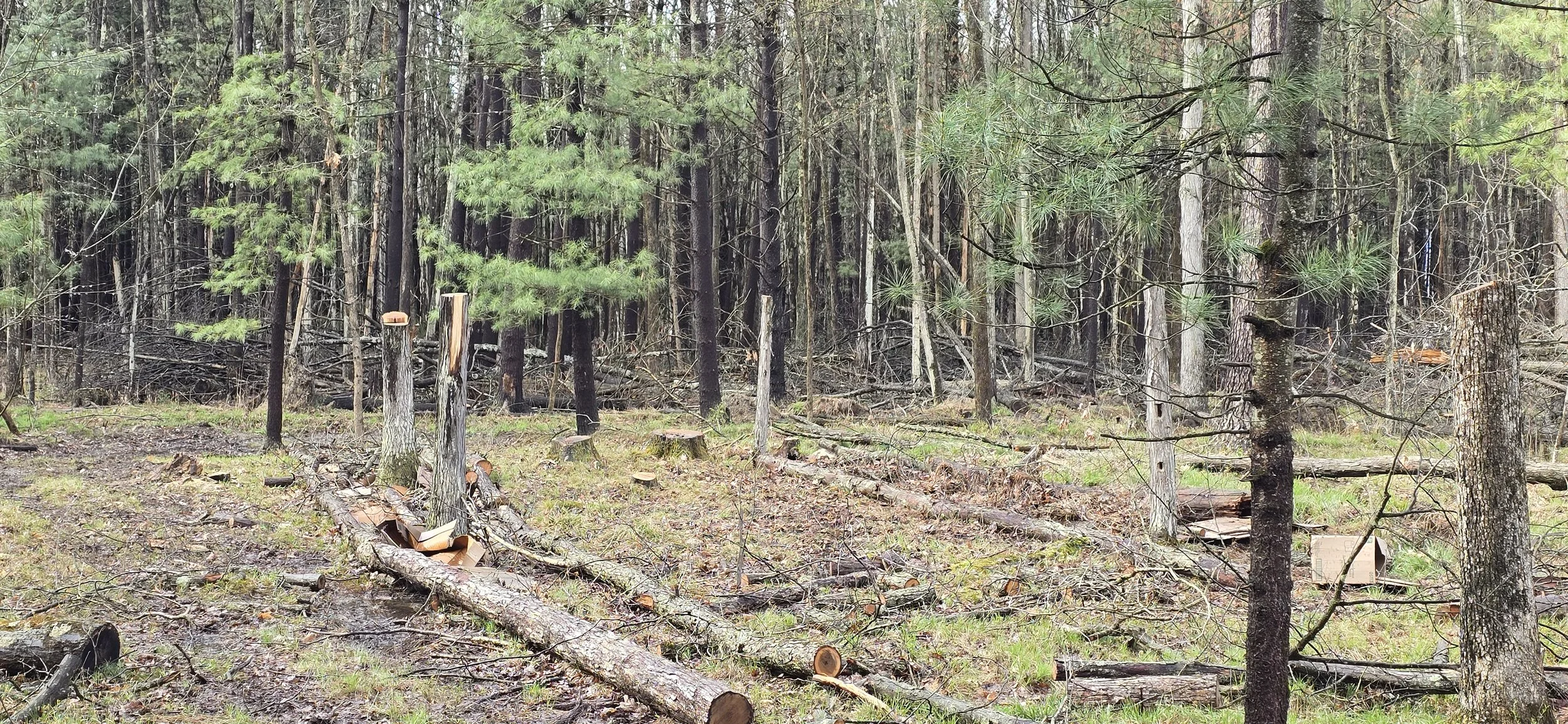
Right now, it still looks chaotic.
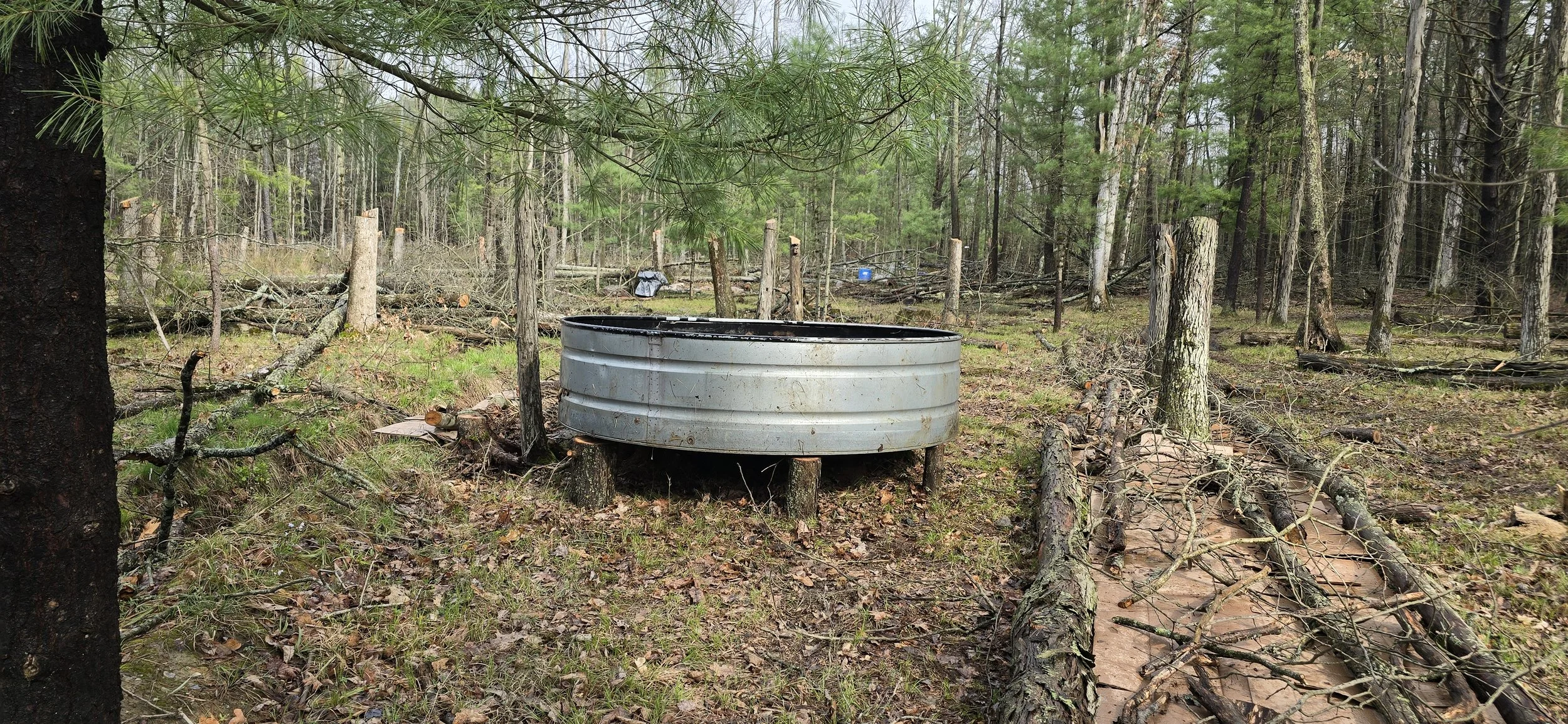
There are stumps. Mud. Uneven ground. Half-finished rows.
But this is what the beginning actually looks like.
It’s not the finished orchard you see in year five—it’s the groundwork that makes year five possible.
Every log moved, every sheet of cardboard laid down, every row slowly taking shape—it’s all part of building something that will eventually feel effortless.
What’s Next
As we continue working east, the focus remains the same:
Extend and connect our blackberry rows
Continue developing the Juneberry hedge system
Begin shaping how water moves through the orchard instead of against it
Plan for the possibility of another dry summer and start collecting water now for use in irrigation.
Add soil and mulch to bring these rows to life
We’re still early. But the direction is set.
And it all started in the southwest corner.
FAQ: Starting a Blackberry Orchard in the Finger Lakes
-
Blackberries require well-drained soil, so raised rows using logs, soil, and mulch help prevent root rot and improve drainage.
-
Sheet mulching uses cardboard as a natural weed barrier, blocking sunlight while breaking down into organic matter over time.
-
Yes, Juneberries (serviceberries) are excellent for natural hedges, offering structure, seasonal beauty, and edible fruit.
-
Regenerative farming focuses on improving soil health using natural materials like wood, mulch, and organic layering instead of synthetic inputs.
