Accessing the Orchard
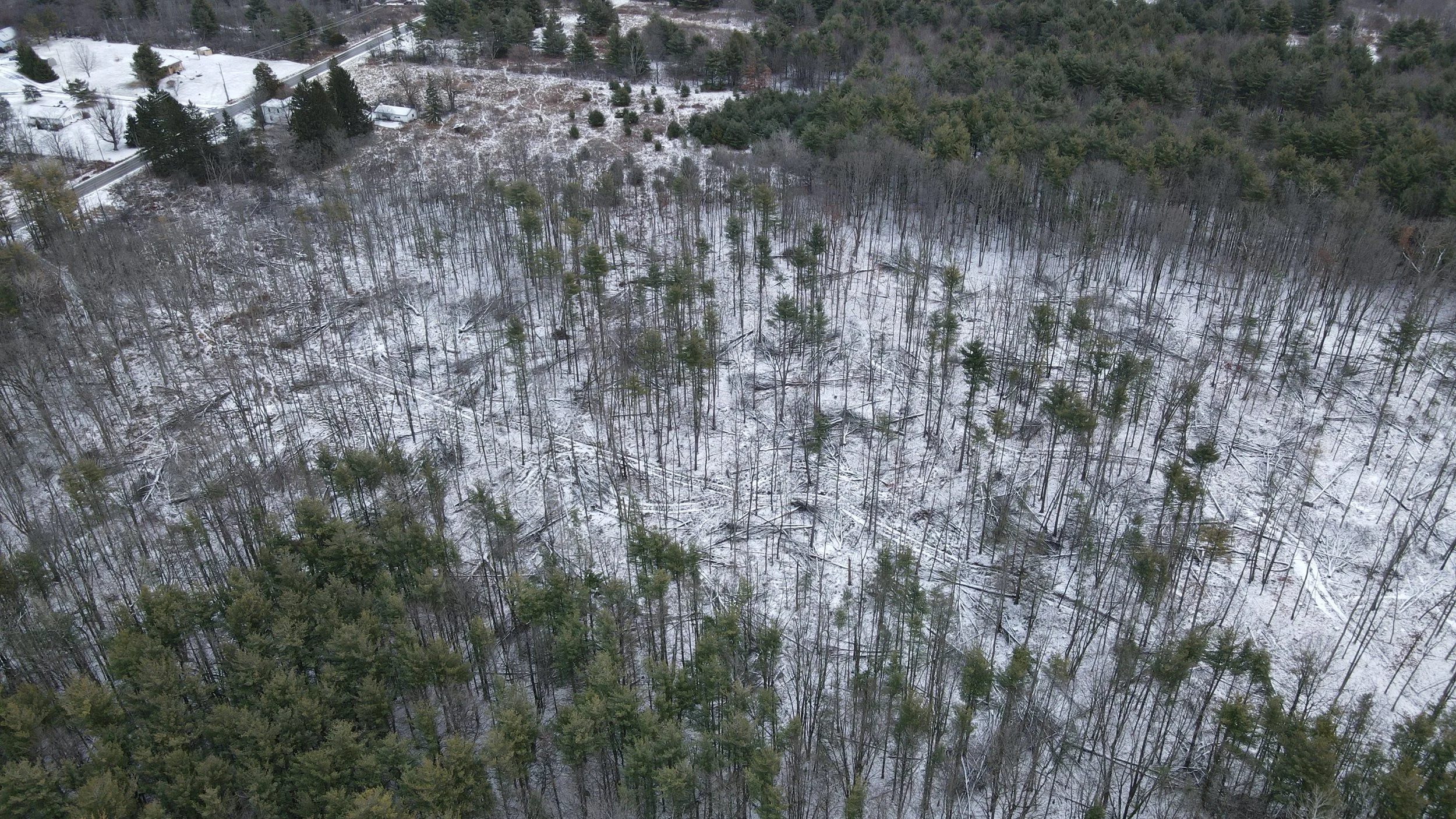
Establishing Access to the Orchard from County Road 114
Before irrigation lines are buried, barns are constructed, or blackberry rows begin to expand across the landscape, the first critical step in establishing North Forest Farms is simple in concept but substantial in execution: creating reliable access to the orchard from County Road 114.
Without dependable access to the orchard area, every future stage of the farm becomes significantly more difficult. Equipment cannot be brought in safely, materials cannot be delivered efficiently, and even routine tasks like planting, pruning, and harvesting become far more challenging. For that reason, the construction of a farm access road represents the first major infrastructure project in the development of the farm.
Why the Road Comes First
Our orchard area sits deeper within the property, beyond the immediate frontage of County Road 114. While the land is accessible by foot and small equipment, it is not yet suited for the type of consistent agricultural access required for a functioning farm operation.
As we begin expanding blackberry plantings and establishing other perennial crops, we will need dependable access for:
• tractors and small farm equipment
• irrigation installation and maintenance
• soil amendments and mulch deliveries
• harvesting operations
• barn construction and equipment storage
• long-term agritourism infrastructure
A properly designed access road ensures that the farm can operate efficiently in all seasons while minimizing soil compaction in productive areas of the orchard.
Design Goals for the Farm Road
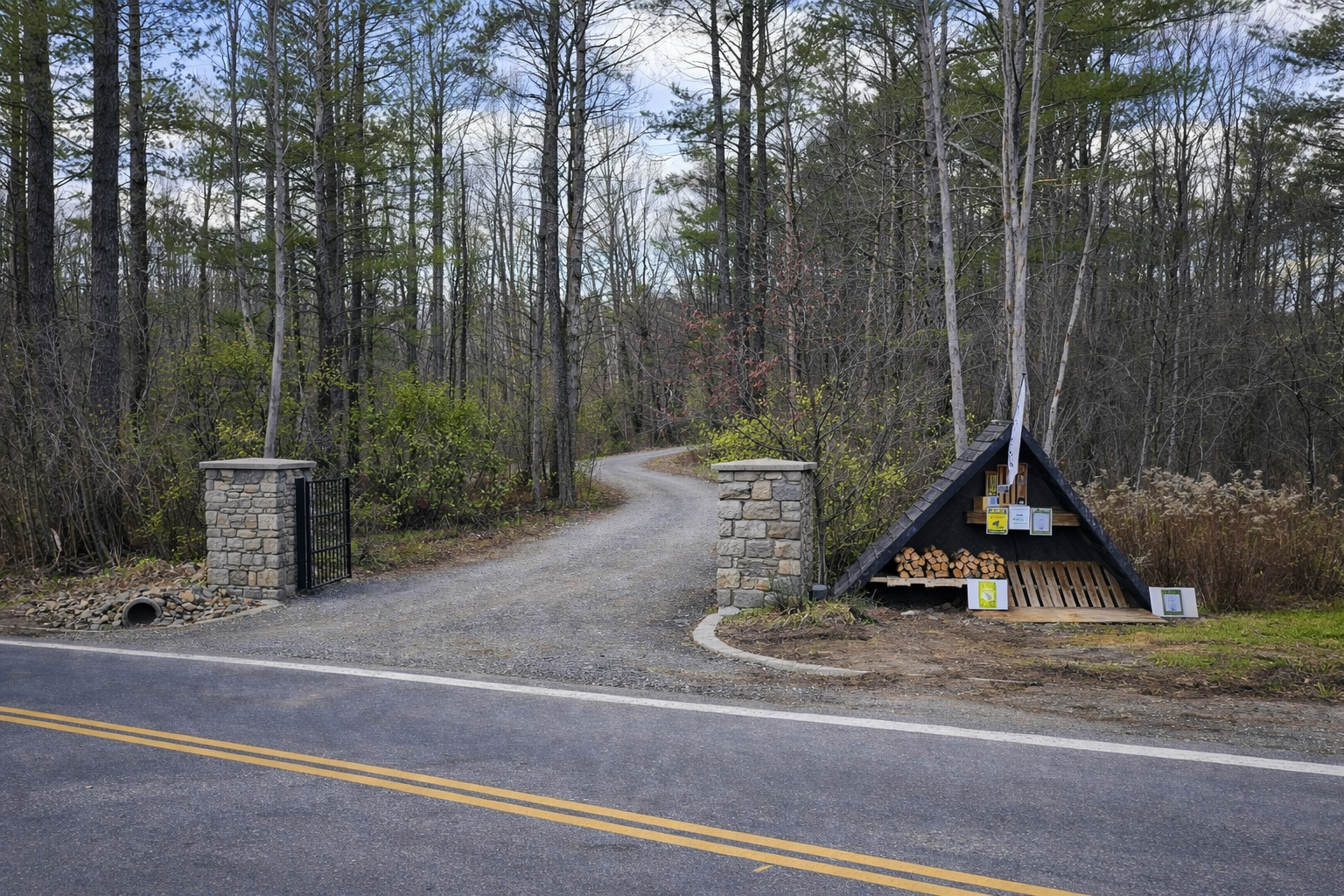
AI Rendering of the Entrance to North Forest Farms from County Rd 114.
The farm road will serve as the primary agricultural corridor connecting County Road 114 to the central orchard area and future farm infrastructure.
Our design focuses on several key principles:
1. Durability for Agricultural Equipment
The road must support repeated travel by:
• tractors
• trucks delivering supplies
• trailers transporting equipment
• potential well drilling rigs and construction vehicles
To achieve this, the road will require a properly prepared base layer, drainage management, and durable surface material capable of handling heavy loads without excessive rutting or erosion.
2. Proper Drainage and Water Management
Because the Finger Lakes region experiences heavy rain, snowmelt, and freeze-thaw cycles, drainage is a critical part of the design.
The road plan incorporates:
• graded swales along sections of the road corridor
• culverts where natural water flow crosses the path
• proper crowning to shed water away from the driving surface
These drainage measures help prevent washouts and ensure that the road remains usable throughout the year.
3. Minimal Disturbance to the Orchard
A key priority is preserving the productive agricultural space within the orchard itself.
Rather than cutting directly through planting areas, the road will be positioned to:
• follow natural clearings where possible
• utilize previously disturbed logging paths when practical
• minimize tree removal beyond what is necessary for safe access
This approach reduces environmental impact while preserving the natural character of the property.
4. Future Infrastructure Compatibility
The road will not only serve current needs but also support future farm expansion.
The corridor is being designed to accommodate:
• electrical service installation
• irrigation infrastructure
• well drilling equipment access
• construction vehicles for future barns and farm structures
By planning this corridor early, we avoid the need to disturb established orchard areas later in the farm’s development.

AI Rendering of the Farm Road with Future Infrastructure Irrigation Pond & Barn in the Distance.
Site Preparation
Before construction begins, the road corridor requires careful preparation.
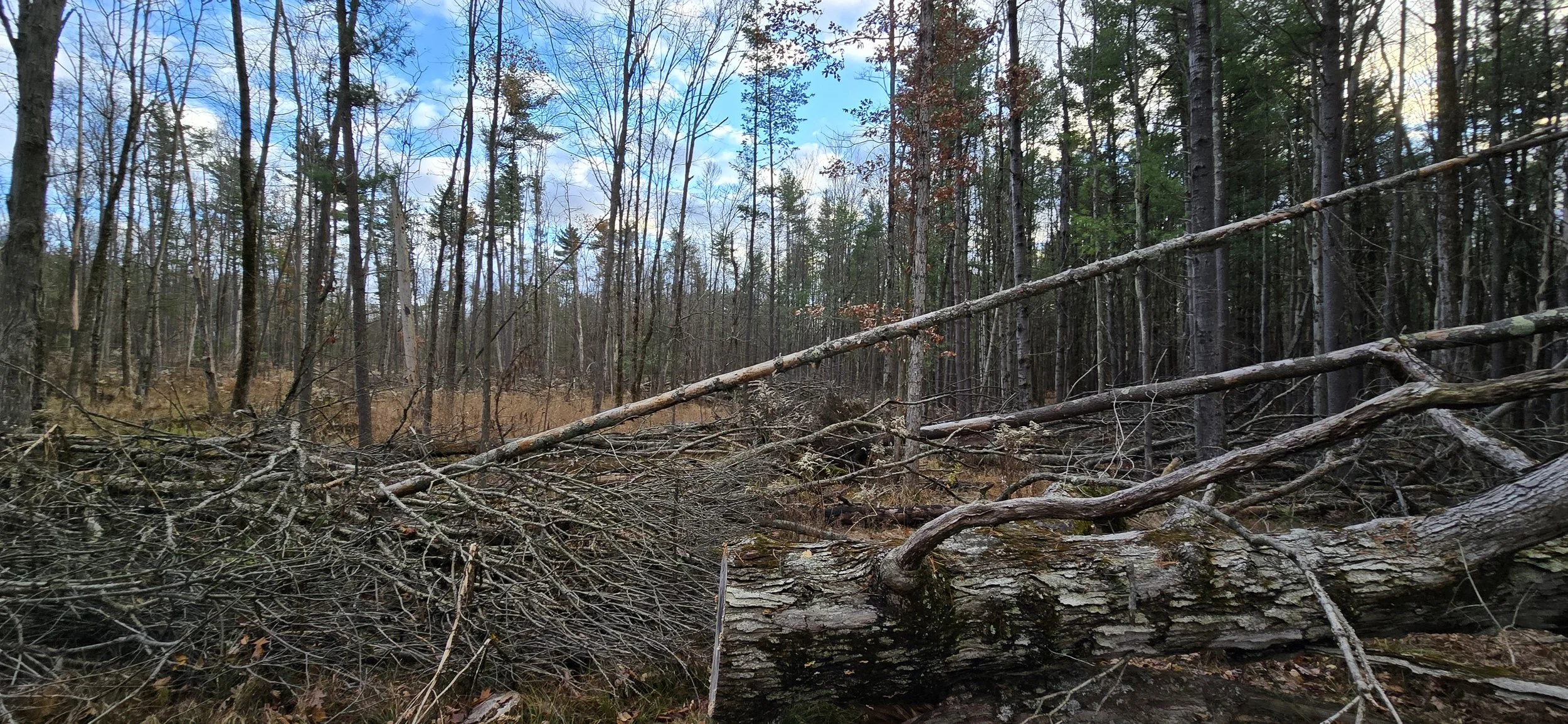
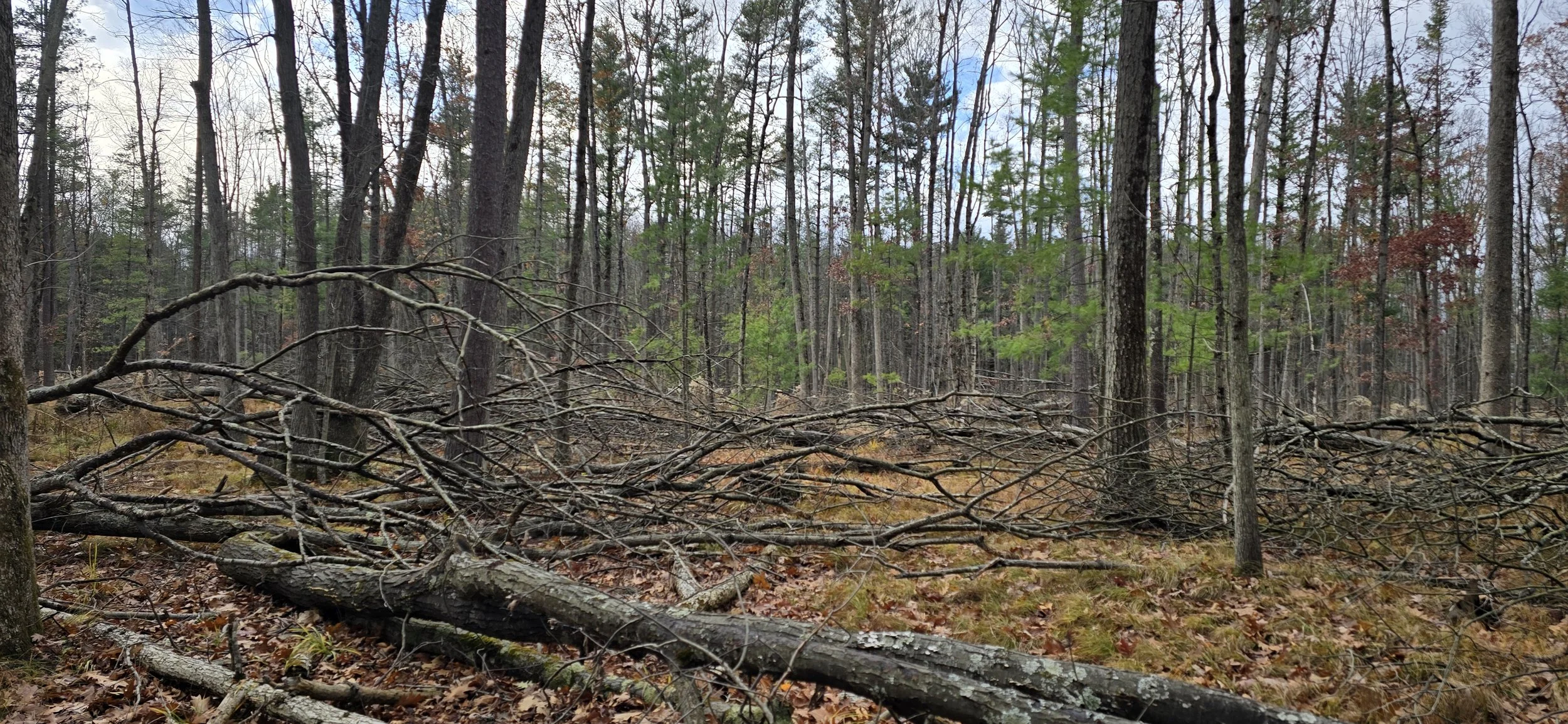
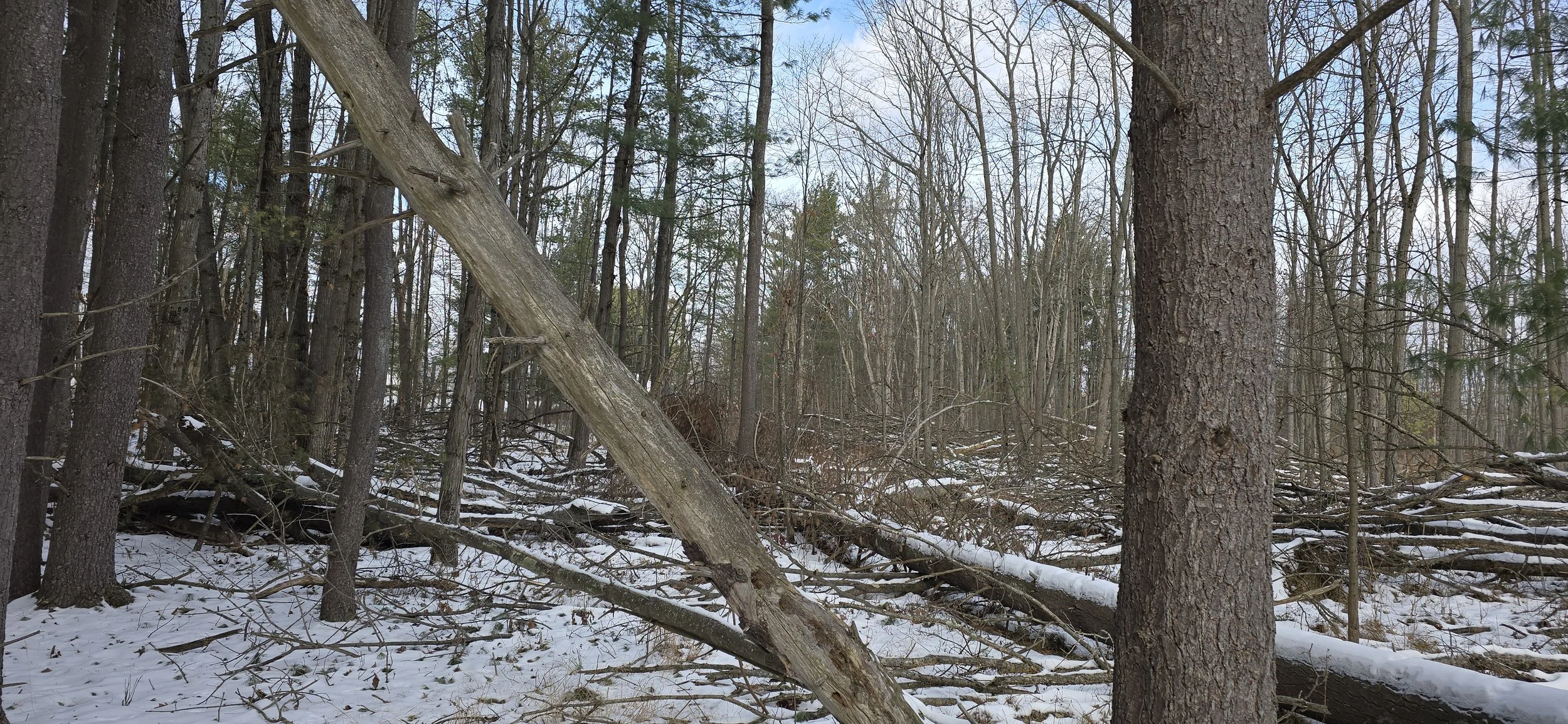
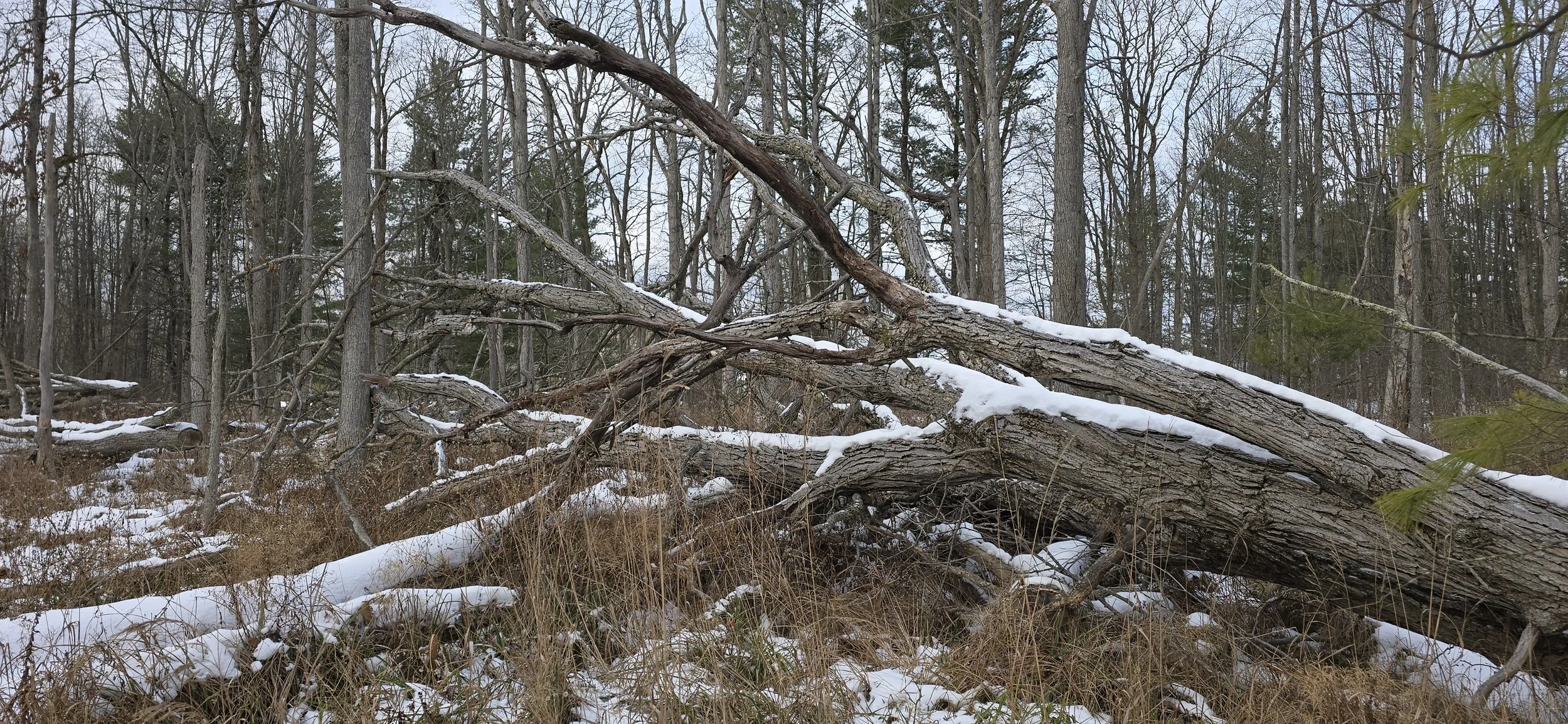
The property underwent a commercial logging operation in 2023–2024, which left sections of the land with heavy equipment ruts and areas of soil compaction. While these areas present challenges, they also provide opportunities to repurpose previously disturbed paths as part of the new farm road alignment.
Initial preparation includes:
• clearing fallen timber and logging debris
• repositioning large logs that can be reused for erosion control and raised orchard rows
• leveling heavily rutted sections of ground
• identifying natural drainage paths that must be preserved
Whenever possible, materials already on the property are being reused to support the development process.
Large logs from the logging operation have already been used in some areas to create structural bases for raised orchard rows, while smaller branches are chipped and repurposed as mulch for blackberry plantings.
This approach helps reduce waste while integrating the natural resources of the property into the farm’s infrastructure.
Road Construction Process
The construction of the farm road will likely occur in several stages.
Stage 1 – Corridor Clearing
The first step is establishing a clear corridor wide enough for safe equipment travel.
This includes:
• removing remaining brush and smaller trees
• cutting back overhanging limbs
• marking the final road alignment
• identifying areas that require grading
Because portions of the land are wooded, careful clearing ensures that we preserve mature trees where possible while maintaining safe visibility and access.
Stage 2 – Rough Grading
Once the corridor is cleared, rough grading will shape the roadbed.
This process will involve:
• leveling uneven ground
• redistributing soil to smooth ruts from previous logging equipment
• establishing the proper slope and crown for drainage
• forming drainage swales along key sections
At this stage, the goal is to establish a stable base that can support the road’s structural layers.
Stage 3 – Base Installation
After grading, the road will receive its structural base.
Typical materials may include:
• geotextile fabric to stabilize the soil
• crushed stone base layers
• compacted gravel to provide a durable surface
The exact composition will depend on soil conditions and drainage needs identified during grading.
Stage 4 – Culverts and Drainage
Where water naturally flows across the corridor, culverts will be installed to prevent erosion and maintain natural drainage patterns.
Proper water management is essential not only for road longevity but also for protecting the surrounding orchard areas from water damage.
Winter Progress and Seasonal Advantages
Much of the early work preparing the farm road is taking place during the winter months.
While cold weather presents its own challenges, frozen ground offers a surprising advantage: heavy logs and large tree sections can be moved far more easily when the ground is frozen and slippery.
Dragging large timber across frozen soil reduces damage to the land and allows materials to be repositioned without creating deep ruts.
Winter conditions also allow us to get ahead on several preparatory tasks before spring planting begins.
As snow accumulates, however, the process becomes more complicated. Work zones, tools, and materials can quickly disappear beneath fresh snowfall, making it difficult to track exactly where progress left off from one visit to the next.
Despite these challenges, winter work is helping move the farm forward before the growing season begins.
Laying the Foundation for the Farm
The construction of the farm road may not be the most visible or glamorous part of building a farm, but it is one of the most important.
Once completed, this access route will unlock the ability to:
• expand blackberry plantings across the orchard
• install irrigation systems and water infrastructure
• bring in materials for future barns and farm buildings
• support long-term agricultural operations
In many ways, the road represents the first permanent step in transforming the land into a working farm.
Every future milestone — from the expansion of the orchard to the construction of barns and the hosting of agritourism experiences — will begin with the simple act of traveling down that road from County Road 114 into the heart of North Forest Farms.