
Establishing Our Blackberry Orchard
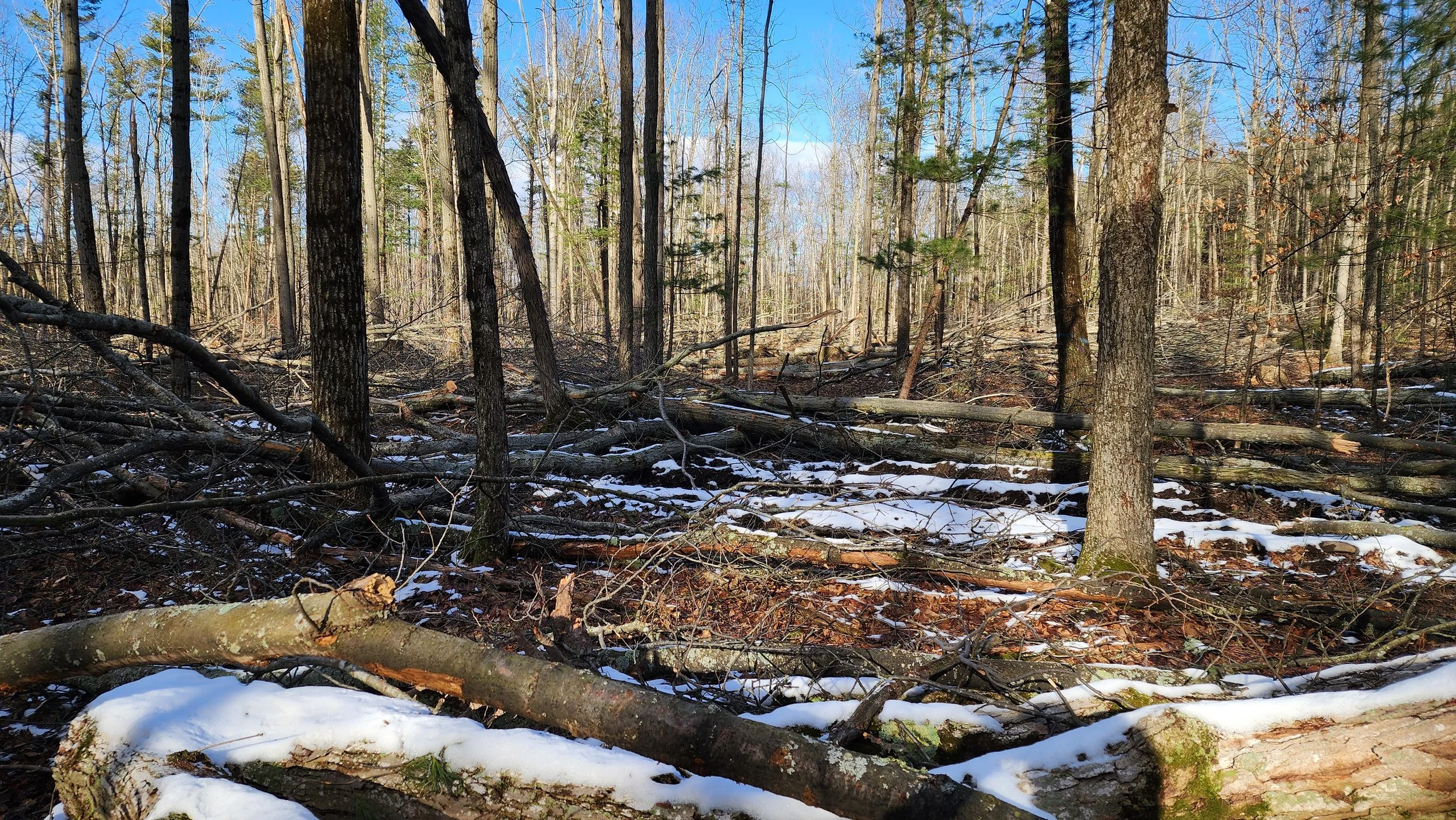
March 2025 - Initial Site Selection
Blackberry Orchard Establishment & Development Plan
At North Forest Farms, our goal is to develop a regenerative blackberry orchard that integrates agriculture, ecology, and agritourism into a single landscape. The process of establishing the orchard has already provided invaluable lessons about soil, water management, infrastructure, and the realities of translating plans on paper into a living farm.
What began as a simple idea—planting rows of blackberries—quickly revealed itself to be a much larger system that requires careful coordination of land management, water infrastructure, soil health, and long-term planning.
This document outlines both our experience establishing the first rows and our development plan for expanding the orchard in the coming years.
Phase 1: Initial Orchard Establishment (Year 1)
The first phase of our blackberry orchard began with the planting of Prime-Ark Freedom blackberries, a thornless primocane variety known for its large fruit and extended harvest season.
Our goal during this phase was to:
• Test blackberry viability on the property
• Begin developing orchard infrastructure
• Understand how our soils, rainfall, and landscape interact with bramble production
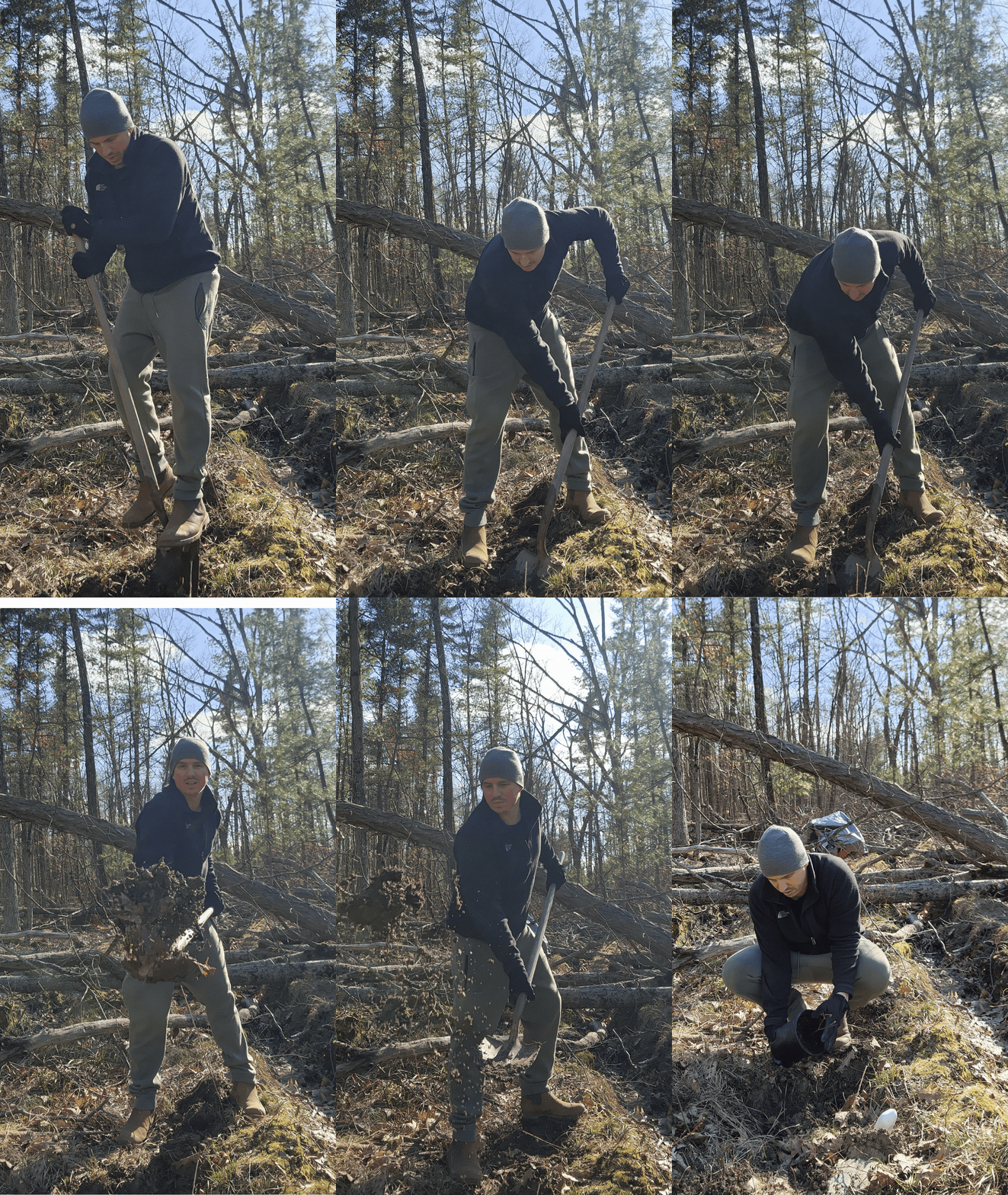
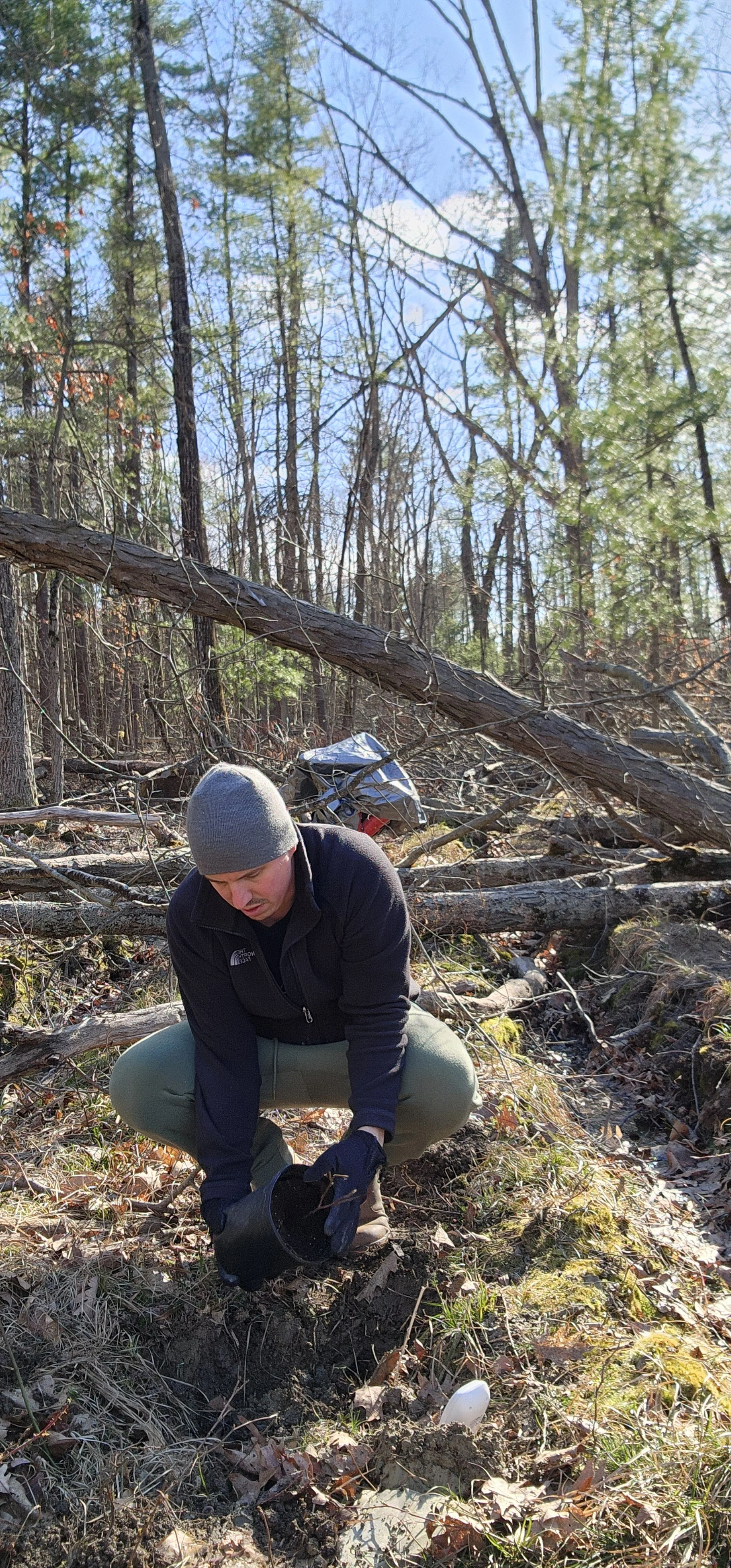


Site Preparation and Early Orchard Establishment
Site preparation at North Forest Farms is still an ongoing process. Rather than fully clearing the orchard area before planting, we have taken a phased approach that allows us to begin establishing blackberry rows while simultaneously improving and restoring the surrounding landscape.
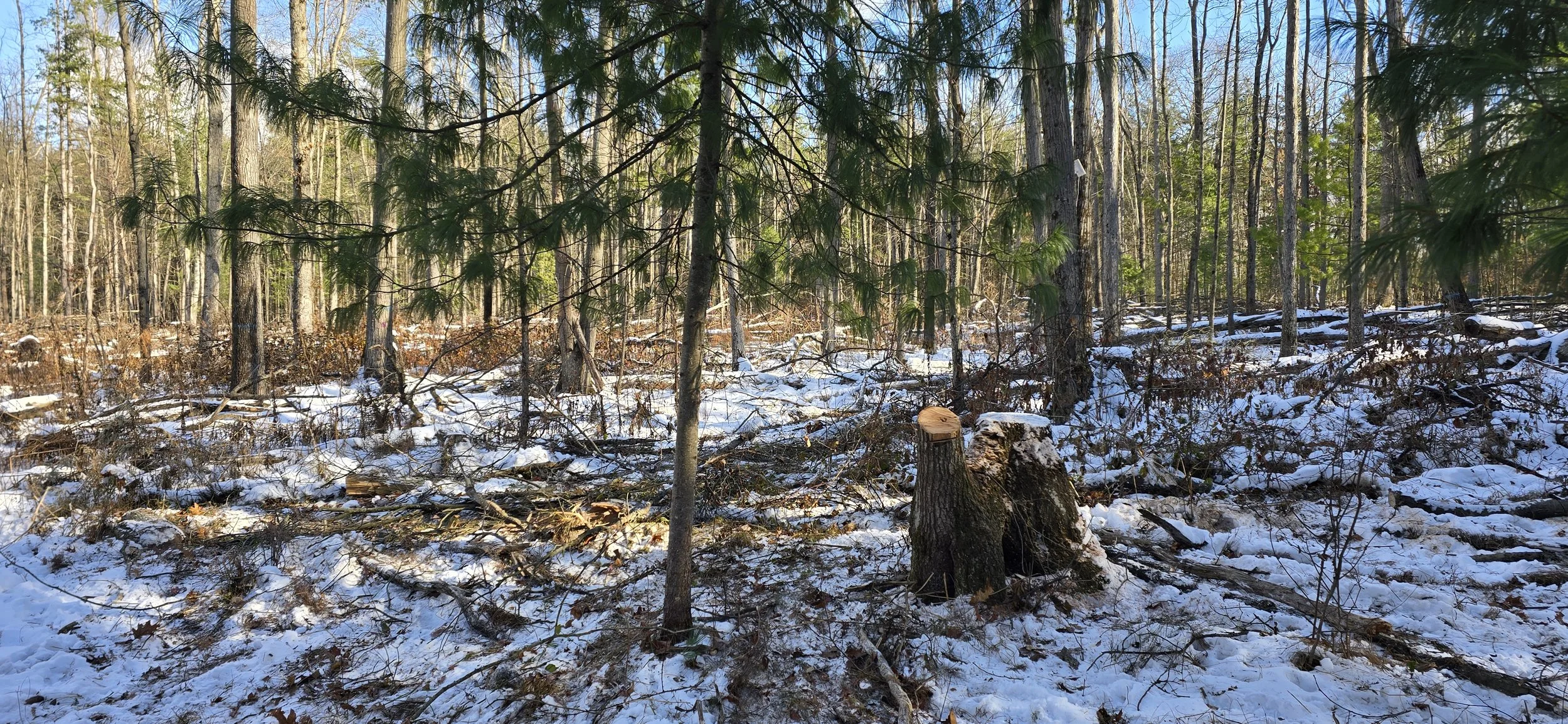
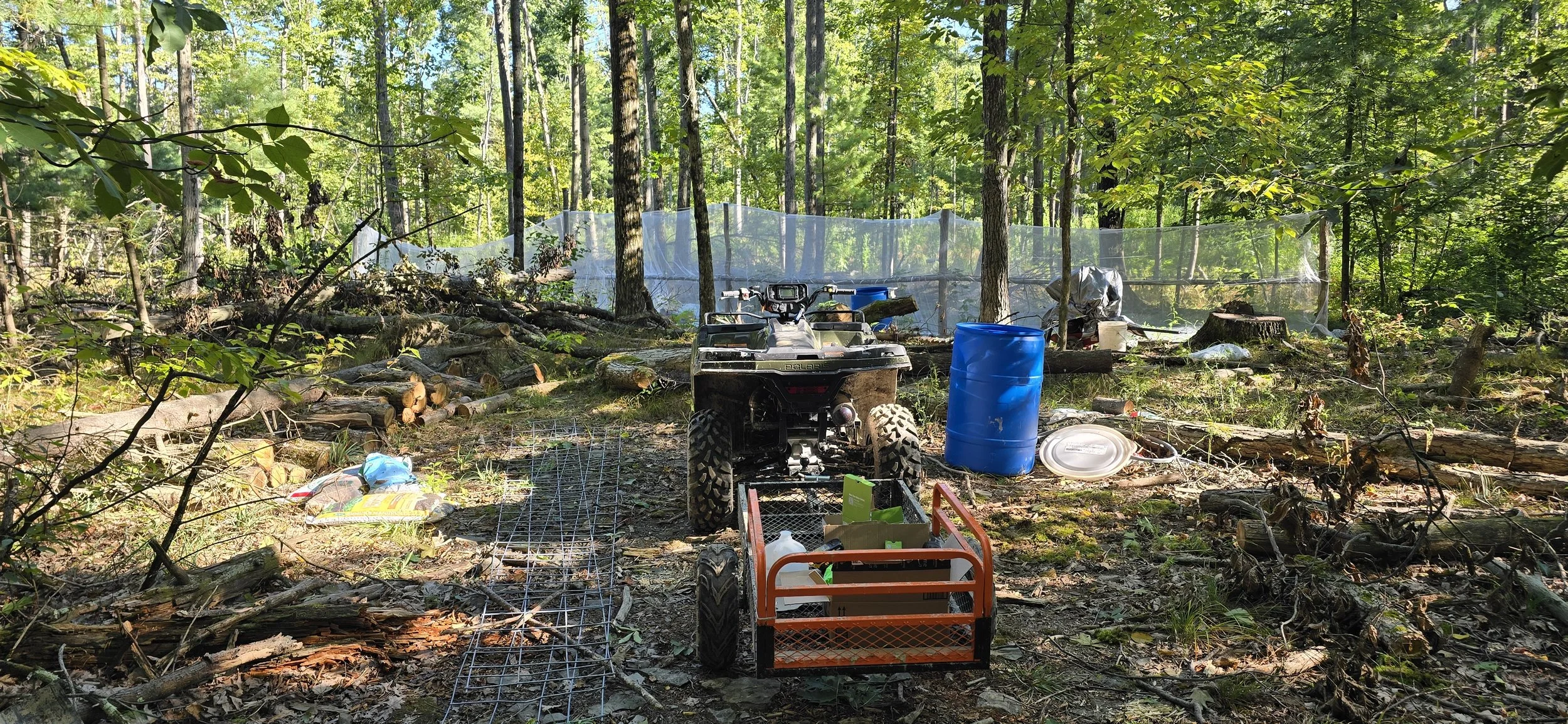
The property experienced a commercial logging operation in 2023–2024 that left behind a significant amount of tree debris, soil compaction, and uneven terrain. While this created challenges, it also provided an opportunity to reuse natural materials already present on the property as part of our orchard establishment strategy.
Instead of removing all of the fallen timber, we have begun incorporating it into the development of the orchard itself.
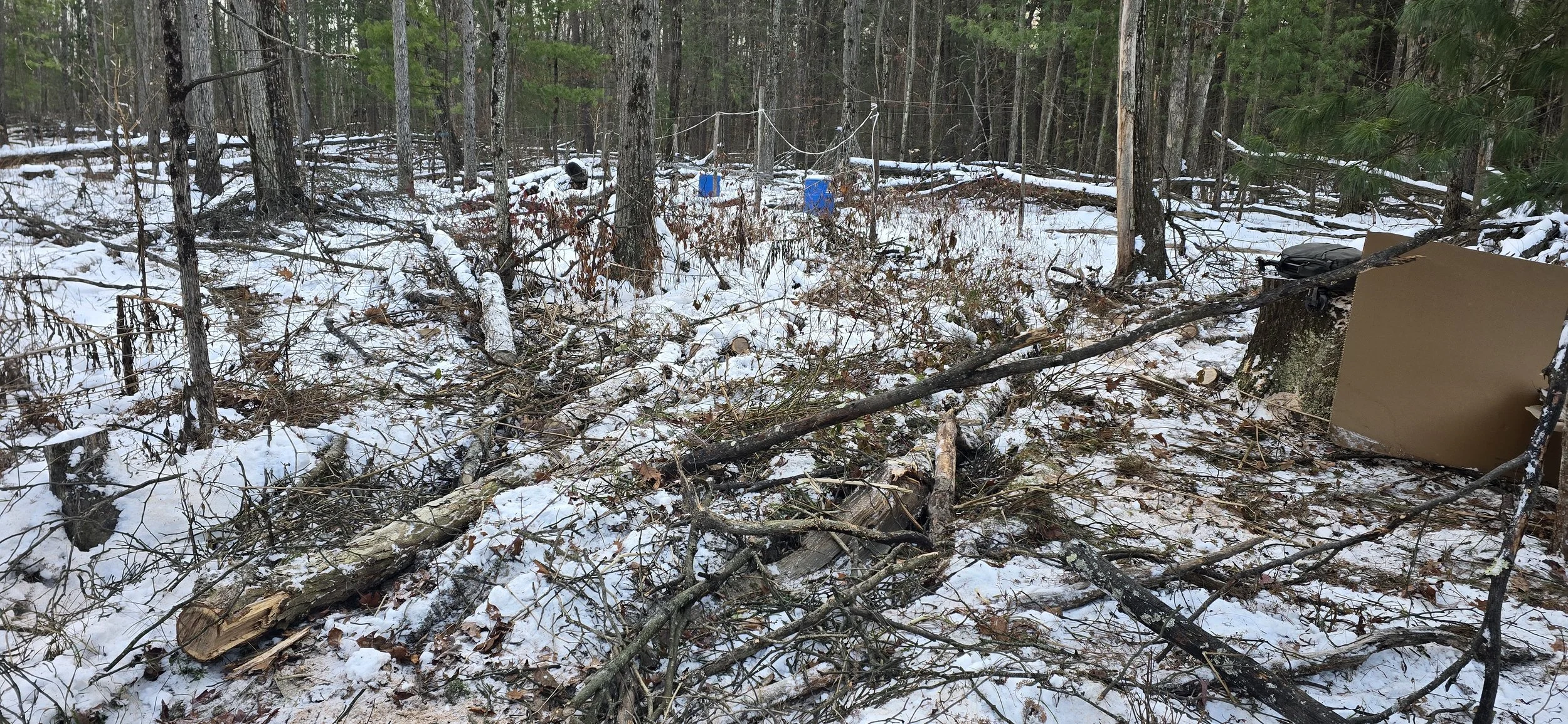
Large tree trunks are being repositioned along the planting rows to help form the base of raised beds. These natural barriers help define the rows while also improving drainage and soil structure in areas that previously experienced compaction.
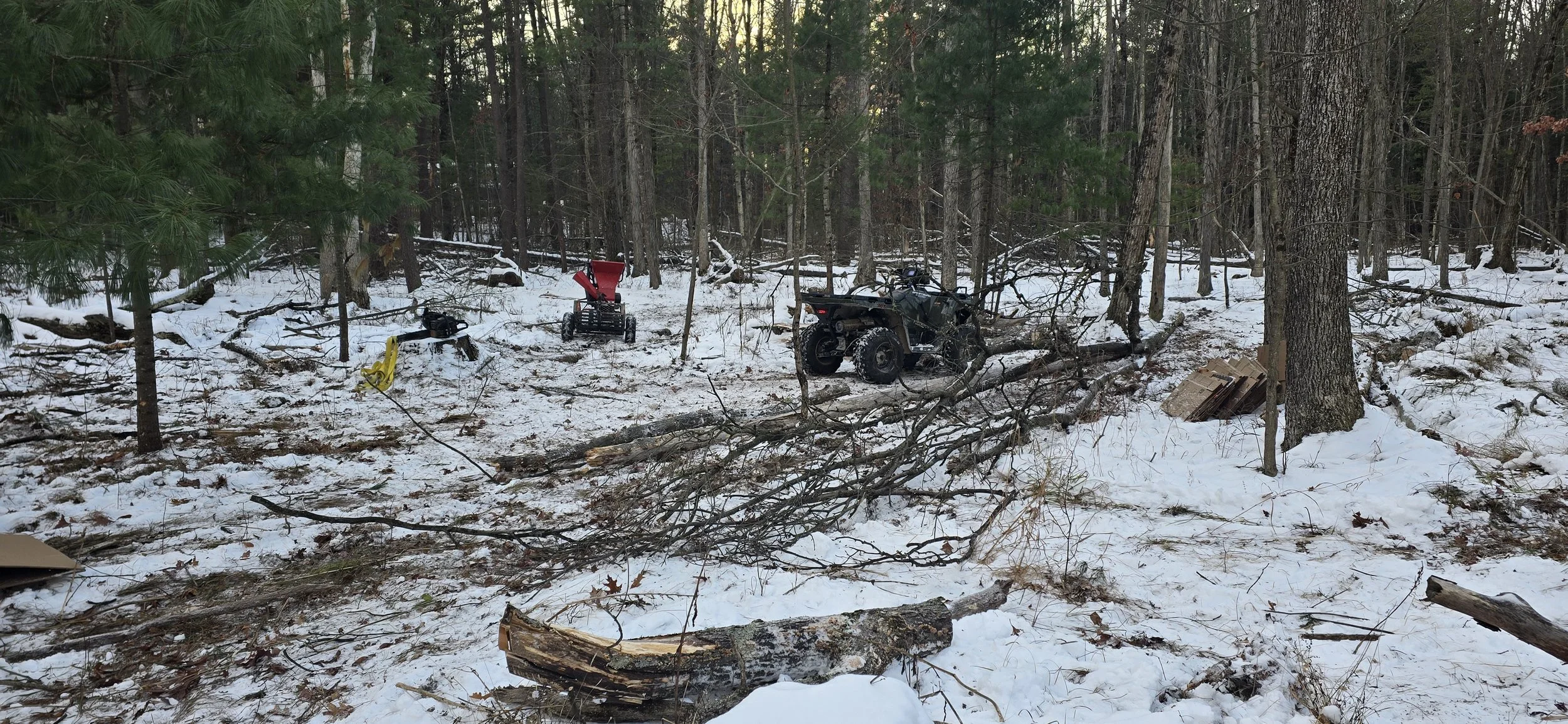
Smaller branches and woody debris are being chipped or layered into the rows as organic mulch. This approach serves several important functions:
• suppressing weed growth
• retaining soil moisture
• improving soil biology as the wood slowly decomposes
• returning organic matter back into the soil
This method allows the orchard rows to develop gradually while making productive use of materials already present on the land.
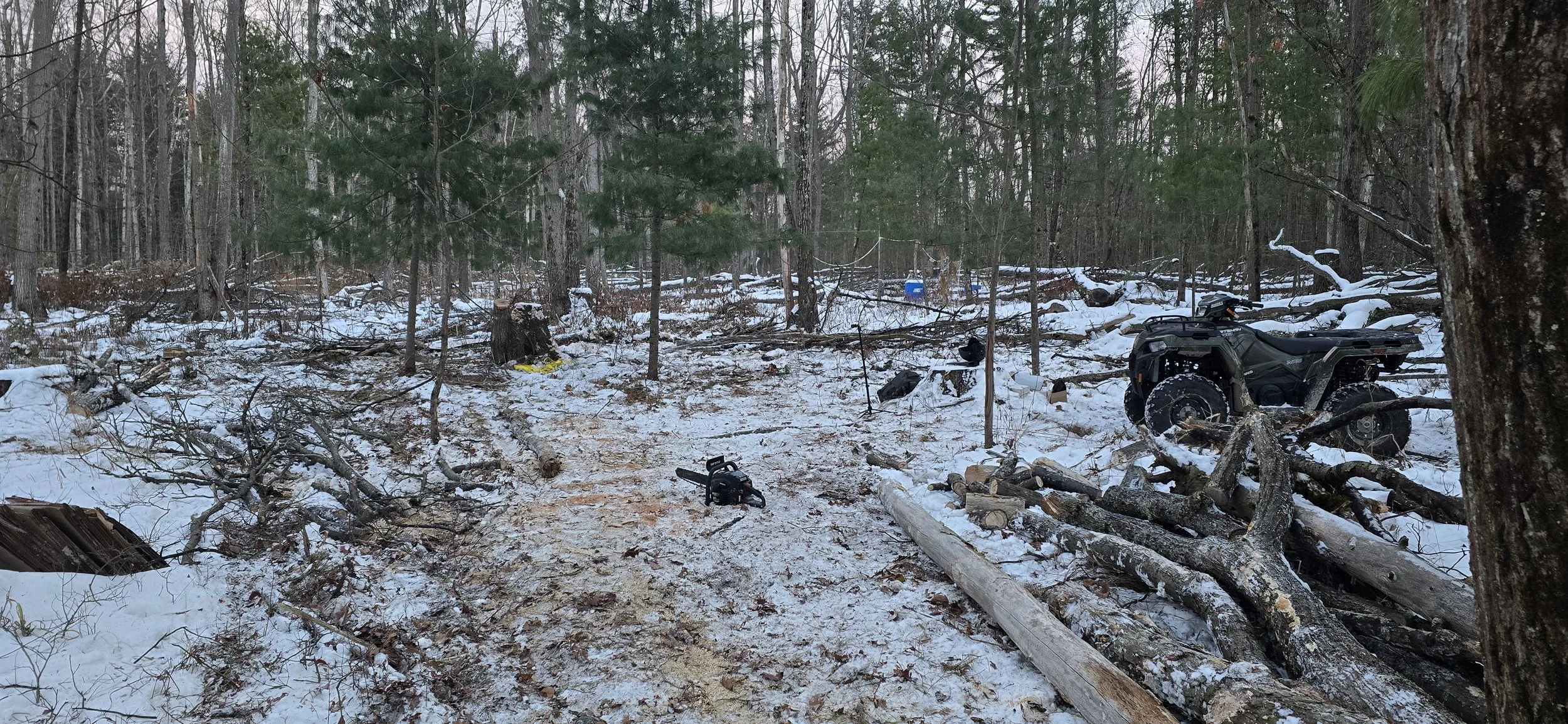
As a result, the first blackberry row is being established while site clearing continues around it. Each work session at the farm involves both expanding the orchard and improving the surrounding landscape.
This slow and intentional process reflects our broader goal of developing the farm in a way that works with the natural resources of the property rather than simply removing them.
A Work in Progress
The orchard at North Forest Farms is still in its earliest stages. The first rows are being planted while the land itself is still being shaped and restored.
Rather than rushing to plant large sections all at once, we are allowing the farm to develop organically. Each step—moving logs, clearing brush, building raised rows, and mulching with natural materials—helps create the foundation for a healthier orchard system.
In many ways, the orchard is growing at the same time the farm itself is being built.
This slower pace has also revealed the importance of planning infrastructure such as irrigation and water access early in the development process. Our experience during the first growing season highlighted how critical reliable water systems will be as the orchard expands.
The lessons learned from establishing the first row are already shaping how we approach the next phases of development.
Winter Work: Getting Ahead of the Growing Season
Much of the work of continuing to establishing the orchard has taken place during the winter months. While working outside in freezing temperatures is not always easy, the frozen landscape has actually created a significant advantage in preparing the farm for the growing season.
When the ground is frozen, heavy logs left behind from the logging operation can be dragged across the land much more easily. The frozen soil and light snow create a surprisingly slick surface, allowing large trunks to slide across the ground with far less resistance than during warmer months when the soil would be soft and muddy. This has made it possible to reposition logs and build the base structure of raised rows without causing additional soil disturbance.
Winter has also been the ideal time to begin installing our cardboard weed barrier system, an approach I learned about during the Cornell Small Farms Berry Production course I participated in this past November and December.
The concept is simple but extremely effective: laying down thick layers of cardboard before the growing season suppresses weeds before they have a chance to establish themselves. By getting this barrier in place now, we avoid having to battle aggressive weed growth during the peak of summer when both time and energy are already stretched thin managing the orchard.
Working ahead of the weeds is far easier than fighting them once they are fully established.
That said, winter preparation comes with its own set of challenges.
Fresh snowfalls often bury the cardboard rows we have already laid down, making it surprisingly difficult to remember exactly where we left off. The challenge is compounded by the fact that the layout of the orchard is still evolving as trees are moved and logs are repositioned to form raised beds. What may have been clearly marked the day before can quickly disappear under a blanket of snow.
Despite these challenges, winter work has proven to be one of the most productive times to prepare the farm. Each cold workday brings another small piece of progress—another section of cardboard laid down, another log moved into place, another step closer to a fully established blackberry orchard.
By the time spring arrives, much of the groundwork for the orchard will already be in place.
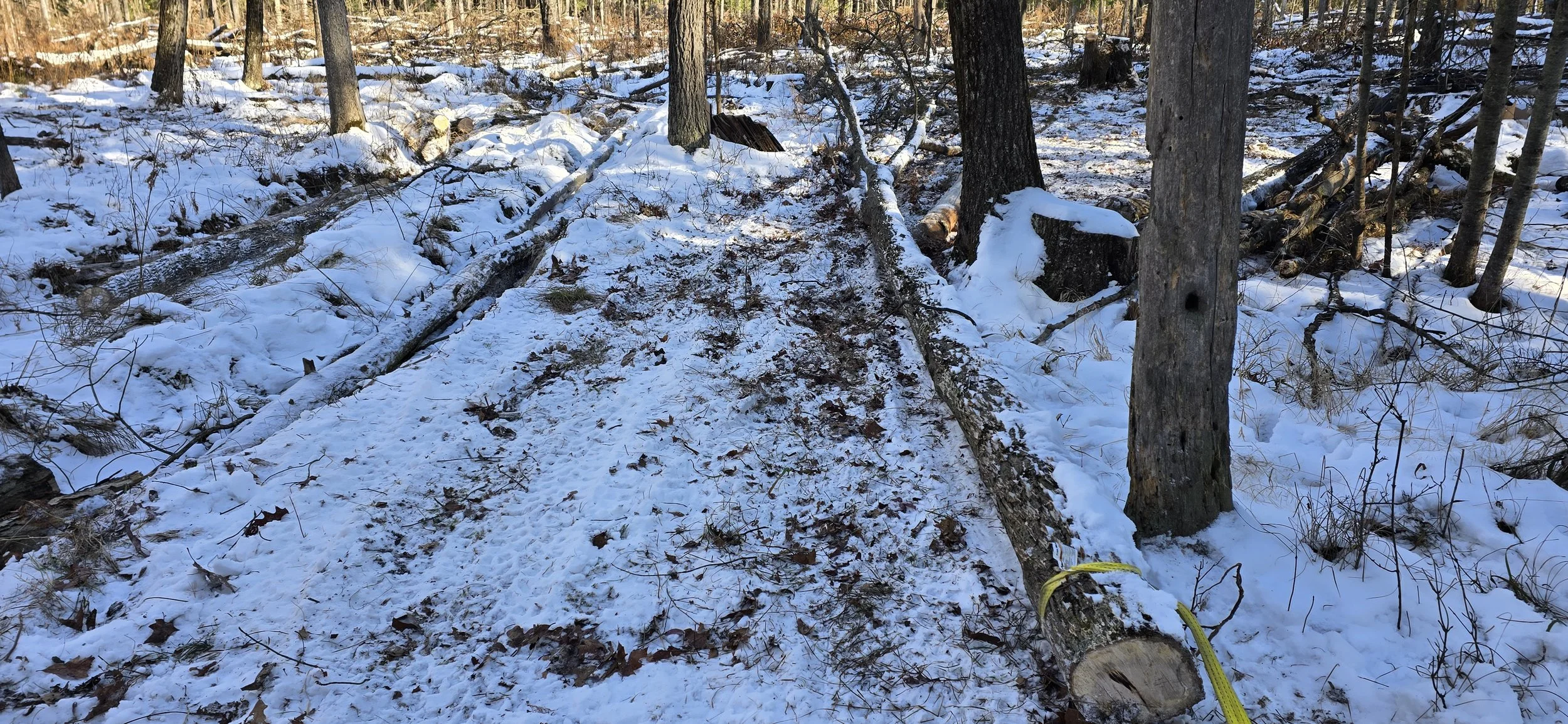
Row Layout
The orchard rows were designed with long-term scalability in mind.
Current layout principles include:
• Row spacing: approximately 10–12 feet between rows
• Plant spacing: approximately 3–4 feet between plants
• Mulched walkways between rows to suppress weeds and improve soil health
The rows were positioned to follow the natural contours of the land to reduce erosion and improve water distribution.
Lessons Learned
The first season of establishment quickly demonstrated how dependent blackberry production can be on reliable water availability.
Our original plan was to rely on:
• rainfall
• rainwater capture
• supplemental watering
However, the summer season proved much drier than expected. Without a dedicated irrigation system, the plants experienced stress that slowed growth and establishment.
This experience made it clear that water infrastructure must precede large-scale planting.
The lesson was simple but important:
Farming requires building the system first, then expanding the crop.
What initially seemed like a straightforward planting project quickly evolved into a much larger infrastructure planning effort involving:
• irrigation
• wells
• electrical service
• farm access roads
